Physical Address
304 North Cardinal St.
Dorchester Center, MA 02124
Physical Address
304 North Cardinal St.
Dorchester Center, MA 02124
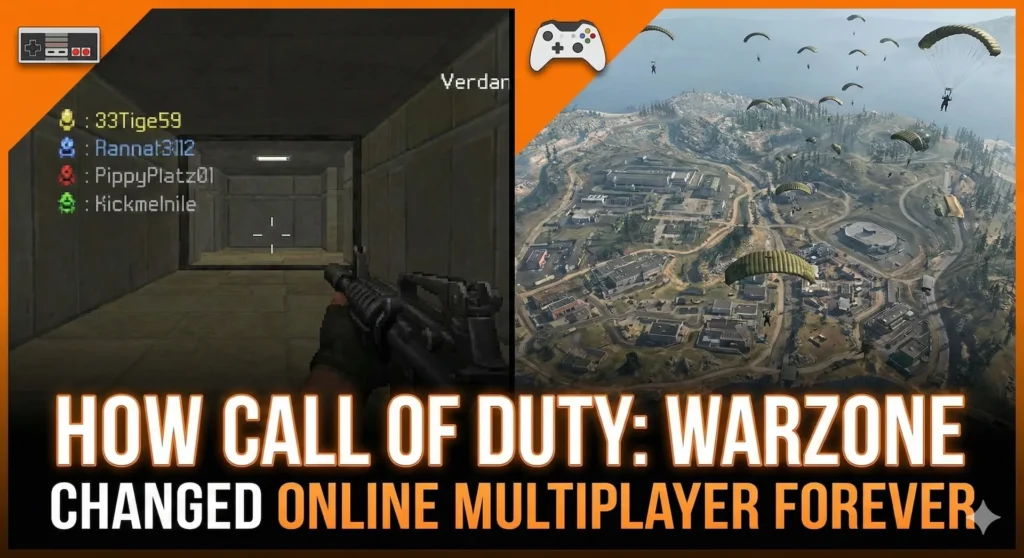
When Warzone launched in March 2020 it didn’t just enter battle royale space but It also redefined expectations of online multiplayer games.
At that time this genre was already dominated by:
But Warzone didn’t copy either model but It hybridized them.
And that hybrid model reshaped multiplayer design philosophy across whole industry.
Before 2020 all battle royale games followed a predictable formula:
This formula worked well for all titles but it had some friction points:
So warzone addressed each one issue so much well.
Gulag system was one of most influential mechanics introduced in most modern multiplayer.
In it Instead of permanent elimination of player:
This did three critical things:
Players no longer quit after early deaths.
Because there was a second chance unlike to dead at once.
Early game RNG deaths felt less punishing.
Game design takeaway:
Warzone optimized emotional pacing.
After Warzone multiple BR titles introduced revival systems or squad redeploy options.
Traditional BR model = randomness determines power.
Warzone introduced purchasable custom loadouts:
This reduced randomness and increased:
It blended : Battle Royale + Classic Multiplayer
This was massive structural shift because now player can have own weapons.
Players weren’t just surviving but they were also executing builds.
Unlike previous premium entries in the Call of Duty series Warzone was launched completely free.
This was critical because series was premium paid and players got:
Without paying upfront.
This changed publisher economics.
After Warzone’s explosive launch Free-to-play AAA became a most dominant model in gaming industry.
Warzone normalized:
Before it crossplay was optional or experimental.
After Warzone It became expected.
Now multiplayer games without cross-platform support feel outdated.
Warzone integrated with:
Operators, weapons, cosmetics transferred across titles.
This created:
A continuous multiplayer universe instead of annual resets.
That ecosystem design improved:
Live-service integration became stronger industry-wide.
Warzone’s movement system created:
This increased:
It is not just a survival but It is also a mechanical mastery.
Verdansk launched with:
Server stability at that scale was impressive.
It set new expectations for:
Warzone operated on a seasonal live-service model:
This ensured:
After Warzone seasonal content became multiplayer standard and seen in most battle royal.
Warzone exploded on Twitch and YouTube.
Why?
Streaming culture amplified game’s multiplayer dominance.
Modern shooters now design with streaming visibility in mind.
Warzone demonstrated:
Publishers observed this carefully and many adopted similar structures.
| Feature | Warzone | Fortnite | PUBG |
|---|---|---|---|
| Launch Model | Free | Free | Paid (initially) |
| Revival Mechanic | Gulag | Reboot Vans | None at launch |
| Custom Loadouts | Yes | No | No |
| Crossplay | Yes | Yes | Limited early |
| Integration | Cross-title | Standalone ecosystem | Standalone |
| Skill Ceiling | High | Moderate | Tactical |
Warzone’s hybrid model stands out.
After Warzone:
It didn’t invent battle royale but It optimized and modernized it.
Call of Duty: Warzone changed online multiplayer because it:
It is not just a successful game but It is also a structural shift in multiplayer design philosophy.