Complete Beginner’s Guide to Esports – How to Go Pro in esports 2026

Esports is a massive structured industry with pro leagues, million-dollar prizes and full-time careers but it’s highly competitive. Most aspiring pros never reach the top so treat it like a serious athletic pursuit: dedication, smart training, health management and patience are essential.

Success stories exist through consistent improvement not overnight talent. In 2026 teams value discipline, teamwork and personal branding as much as raw skill.
Complete Beginner’s Guide to Esports – How to Go Pro in 2026

1. Understand Esports in 2026 and Set Realistic Expectations

Esports features stable titles with active ranked ladders, regular tournaments and developer support. Top games by viewership and prize pools include:

  • League of Legends (LoL) — Massive global audience and structured leagues.
  • Counter-Strike 2 (CS2) — High prize pools and consistent competition.
  • Valorant — Tactical shooter with franchised leagues and solid salary floors.
  • Mobile Legends: Bang Bang and other mobile titles — Especially strong in certain regions.
  • Others: Dota 2, Rocket League, Fortnite, fighting games (e.g. Street Fighter 6).

Salaries: Entry-level pros in major leagues start around $50k–$60k USD (higher in some regions like Europe for LoL). Top players earn $100k–$480k+ with sponsorships. Many earn via streaming/content even without a top team.

Timeline: Expect 1–3+ years of serious grind to reach semi-pro/pro levels. Most spend years in amateur scenes. Burnout is common so prioritize sustainability.

Alternative paths (often more realistic): Coach, analyst, content creator, streamer, tournament organizer, caster or manager. Many industry roles don’t require pro play.

2. Choose Your Game and Role Wisely

Pick one main game with a strong competitive scene. Jumping titles wastes time.

  • Assess your strengths: Aim/mechanics (FPS), strategy/macro (MOBA), teamwork/comms or clutch performance.
  • Research roles (e.g. Entry Fragger/Support/IGL in shooters; Jungle/Support in LoL).
  • Watch pro play (Twitch, YouTube, official broadcasts) to understand meta.

Commit for at least 6–12 months before switching.

3. Build Your Setup (Don’t Overspend Early)

Minimum viable setup:

  • Stable, low-ping internet (wired preferred).
  • 144Hz+ monitor.
  • Decent gaming mouse (wired) and keyboard.
  • Comfortable headset with mic.
  • Ergonomic chair and good posture setup.

Upgrade only as skill demands it. High-end gear won’t compensate for poor fundamentals.

4. Train Like a Pro (Structure Over Grinding)

Casual play ≠ training. Pros use deliberate practice.

Sample Daily/Weekly Routine (adjust for school/work):

  • Warm-up (30–60 min): Aim trainers (e.g. Aim Lab, Kovaak’s for FPS), CS drills (LoL), mechanics practice.
  • Ranked/Scrims (3–6 hours): Focused games with intent.
  • Review (1–2 hours): Watch your replays/VODs. Ask: What decisions cost me? What can I improve?
  • Study (30–60 min): Pro VODs, guides, patch notes.
  • Physical/Mental: Exercise 3x/week, stretches, fixed sleep schedule, breaks every 1–2 hours.

Key habits:

  • Limit sessions to quality time (e.g., 4–8 focused hours > 12 tired ones).
  • Track progress (stats, one improvement goal per session).
  • Mental training: Handle tilt, positive self-talk, visualization, breaks after losses.
  • Replay review is one of the highest-ROI activities.

Aim for high ranks (e.g. Diamond+ in LoL/Valorant, Faceit Level 10+ in CS2) before focusing heavily on tournaments.

5. Compete Early and Often

Don’t wait to be “good enough.” Tournaments build experience, nerves and resume.

Starting points:

  • In-game ladders and modes (Clash in LoL etc.).
  • Amateur online cups on platforms like Battlefy, FACEIT, ESL Play, Challengermode, Start.gg, Toornament.
  • Community Discords, local LANs, university events.

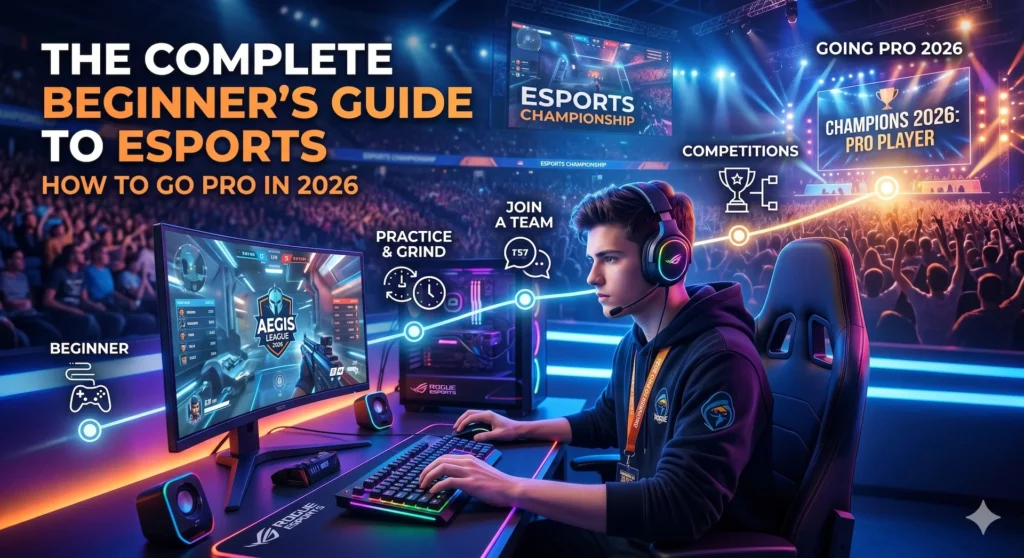
Progress: Amateur → Semi-pro qualifiers → Pro tryouts/academy teams. Record matches, save highlights.

6. Form or Join a Team

Solo success is rare. Look for teammates with similar schedules, goals and positive attitudes via ranked play, Discords, Reddit or tournament communities.

Evaluate: Communication, willingness to review losses, reliability. Avoid toxicity and drama.

7. Build Your Personal Brand and Network

In 2026 visibility matters. Teams scout socials and streams.

  • Stream practice (Twitch, YouTube, Kick) or post clips/highlights.
  • Maintain professional, positive online presence.
  • Network: Engage with players, coaches, managers. Attend events when possible.
  • Share improvement journey not just flexing wins.

Content creation can provide income and exposure even if pro play doesn’t pan out.

8. Health, Mindset and Sustainability

Pros treat this like sports:

  • Physical: Exercise, wrist/shoulder stretches, proper ergonomics, nutrition, sleep (7–9 hours).
  • Mental: Manage burnout, tilt control, growth mindset (losses = learning). Consider sports psychology resources.
  • Balance with life (school, work, social). Long-term health > short-term grinds.

Common mistakes to avoid: Game-hopping, gear-chasing, ignoring health, blaming teammates, skipping reviews/tournaments.

9. Path to Pro: Milestones

  1. Months 1–3: Learn fundamentals, reach mid-high ranks, start small tournaments.
  2. Months 3–12: Consistent high ranks, regular amateur events, basic team/content.
  3. Year 1+: Master/Challenger or equivalent, semi-pro leagues, tryouts, networking.
  4. Pro: Academy/roster spot, qualifiers for major leagues (e.g., VCT, LCS/LEC equivalents).

Scouting combines, academy teams and regional leagues are common entry points.

Final Advice

Start today with focused practice in one game. Consistency beats intensity. Track progress monthly. Be patient—most “overnight” pros grinded for years unseen.

If pro doesn’t work out, skills (discipline, teamwork, performance under pressure) transfer well and esports offers many adjacent careers.

Stay focused, compete, review and improve. Your esports journey starts with next intentional practice session. Good luck in 2026!