Physical Address
304 North Cardinal St.
Dorchester Center, MA 02124
Physical Address
304 North Cardinal St.
Dorchester Center, MA 02124
Arc System Works has spent years refining the art of anime fighter—Guilty Gear, BlazBlue, Dragon Ball FighterZ. Today it applies that expertise to Marvel’s vast roster in Marvel Tōkon: Fighting Souls, a 4v4 tag-team fighter that launches exclusively on PlayStation 5 and PC. The result is one of the most distinctive superhero fighting games in years: flashy, surprisingly approachable and built around a combat system that starts intimate and explodes into full-team chaos.
Released worldwide on August 6, 2026 (August 7 in Japan and parts of Australasia), this game arrives with high expectations and a bold design philosophy that sets it apart from both classic Marvel vs. Capcom entries and Arc’s own prior work.
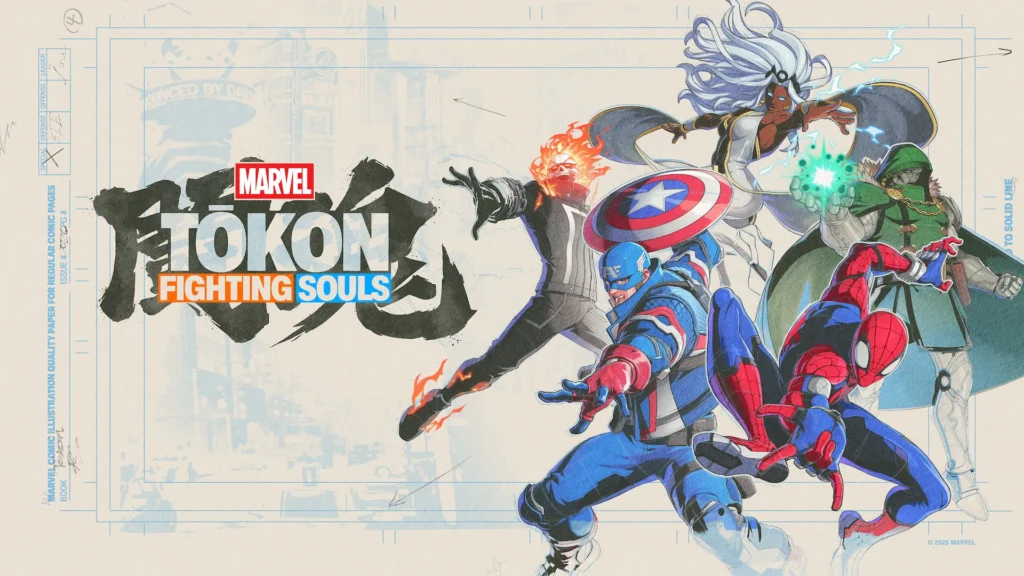
At its core Tokon is a tag-team fighter that reimagines how multiple characters share screen. You assemble a team of four Marvel heroes or villains before a match. When fight begins, you control only one point character plus a single assist. As you deal damage, trigger stage transitions or fulfill other mid-match conditions additional teammates unlock. By end of a round you can be swapping freely among all four fighters while calling assists, creating genuine 4v4 exchanges.
A single shared life bar for entire team keeps focus on collective survival rather than individual knockouts. Stages feature multiple interconnected areas linked by dramatic “Wall Breaks”—powerful attacks that send opponents flying into a new environment with a short cinematic transition. This visual style blends Arc System Works’ signature anime flair with comic-book dynamism: bold line work, exaggerated effects and character designs that feel both familiar and freshly stylized.
Single-player Episode Mode delivers original stories for each of five launch teams presented through motion comic panels with full voice acting and written by comic veteran Kieron Gillen. The overarching premise involves Champion of Universe challenging Earth’s heroes and villains with enigmatic Promoter serving as his herald.
The combat system is star. Five primary buttons (Light, Medium, Heavy, Assemble, Unique) plus directional inputs deliver both easy chain combos for newcomers and layered resource management for veterans. Assemble Gauge powers assists, supers and team synergies. Timing is everything—successful wall breaks, assist calls and tag switches reward precise decision-making without demanding input density of older tag fighters.
Matches begin readable and relatively controlled then escalate as more characters enter fray. Shared health bar and staged unlocks create natural narrative arcs within each bout: early probing, mid-round resource races and late-game team fireworks. Movement is deliberate rather than hyper-mobile; air control feels floaty by design encouraging grounded pressure and thoughtful positioning.
20-character launch roster is divided into five themed teams of four (Unbreakable X-Men, Amazing Guardians, Fighting Avengers, Knights of Doom, Samurai Outriders) though free team-building is available in most modes. Standouts in early play include Magik’s dimensional toolkit, Ghost Rider’s Vengeance Gauge, Spider-Man’s web mobility and Magneto’s commanding presence. Accessibility options—simplified inputs, adjustable difficulty robust training tools—make fantasy of playing as these icons available to a wide audience while still offering depth competitive players crave.
Online features include ranked and casual matchmaking with full cross-play between PS5 and PC plus large lobbies supporting up to 64 players. Rollback netcode is present and beta period already showed strong concurrent player numbers on Steam.
As of launch day Metacritic scores are still settling but previews and beta feedback have been largely enthusiastic. Reviewers and players consistently praise visual presentation, clever evolution of tag formula and how quickly game feels good to play. Many call it most approachable high-profile fighting game in recent memory without sacrificing mechanical richness. Some note that deliberate pacing and shared health system may feel slower or less chaotic than Marvel vs. Capcom 2 or Dragon Ball FighterZ to veterans of those titles and a minority of PC beta players reported performance hiccups that Arc has indicated it is addressing.
Episode Mode has drawn particular attention for its comic-manga hybrid storytelling and estimated 10–12 hour runtime across five team arcs.
Marvel Tōkon: Fighting Souls succeeds because it refuses to simply recreate past Marvel fighters. Arc System Works has taken fantasy of teaming up iconic characters and built original systems around it—systems that feel cinematic in moment and rewarding over time. The gradual escalation from one-on-one pressure to full 4v4 spectacle gives every match a sense of momentum that pure free-tag games often lack.
It is not purest traditional fighter nor is it a pure Marvel vs. Capcom successor. It is something newer: a stylish team-focused arena fighter that welcomes casual Marvel fans while giving fighting-game community a deep new sandbox to explore. On launch day foundation looks rock-solid—gorgeous, inventive and full of personality.
If you’ve ever wanted to see Spider-Man web-zip into a Magneto assist while Deadpool and Blade crash party a few seconds later this is the game that finally delivers that fantasy with Arc System Works’ trademark polish. Assemble your team. The Champion is waiting.